
Bordetella pertussis and Bordetella parapertussis are bacteria responsible for causing whooping cough, a highly contagious respiratory disease. Rapid and accurate detection of these pathogens is crucial for timely diagnosis, treatment, and prevention of outbreaks. Polymerase Chain Reaction (PCR) has become the gold standard for detecting these bacteria due to its high sensitivity and specificity. To ensure the reliability of PCR assays, positive quality controls are essential in confirming the accuracy of test res
Importance of Positive Quality Control in PCR Testing
Positive quality control (QC) materials are vital for verifying that PCR tests for Bordetella pertussis and Bordetella parapertussis are functioning correctly. These controls contain known concentrations of target bacterial DNA, which serve to validate the performance of the PCR assay. Laboratories can use these controls to ensure that their tests are accurately identifying the presence of these pathogens, and not producing false negatives or positives. According to the Centers for Disease Control and Prevention (CDC), the use of positive controls in molecular diagnostics ensures reliable results and compliance with quality standards in clinical laboratories.

PCR Testing for Bordetella pertussis & Bordetella parapertussis
PCR-based assays are highly effective in detecting both Bordetella pertussis and Bordetella parapertussis, even in the early stages of infection when bacterial load is low. This molecular method targets specific DNA sequences unique to these bacteria, ensuring accurate differentiation between the two species. Research from National Institutes of Health (NIH) has shown that PCR can detect these pathogens with greater sensitivity compared to traditional culture techniques, which can take days to yield results.
Role of Positive Controls in Ensuring Accuracy
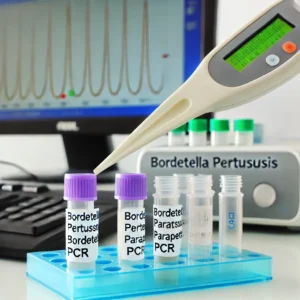
Positive QC materials for Bordetella pertussis and Bordetella parapertussis PCR assays typically contain purified DNA or inactivated bacteria at known concentrations. These controls are critical in:
- Verifying Assay Sensitivity: Ensuring that the PCR can detect low levels of bacterial DNA, which is crucial for early diagnosis of whooping cough.
- Preventing False Negatives: If the test does not detect the positive control, it indicates that the PCR assay is not functioning correctly, which could lead to undetected infections.
- Routine Monitoring: According to World Health Organization (WHO) guidelines, positive controls should be used regularly in clinical laboratories to ensure consistent test performance over time.
Challenges and Considerations
One challenge with using PCR to detect Bordetella species is the risk of contamination, which can lead to false positives. This makes the inclusion of positive controls even more critical, as they help labs differentiate between true positives and contamination events. Food and Drug Administration (FDA) guidelines recommend that laboratories implement strict procedures when handling positive control materials to prevent cross-contamination.
Regulatory Standards for Quality Control
PCR assays for the detection of Bordetella pertussis and Bordetella parapertussis are subject to stringent regulatory standards. Organizations such as Clinical Laboratory Improvement Amendments (CLIA) and College of American Pathologists (CAP) require clinical laboratories to perform regular quality control testing, including the use of positive controls, to ensure the accuracy and reliability of diagnostic tests. Meeting these regulatory standards is essential for labs to maintain their certification and provide high-quality patient care.
Benefits of Positive Quality Control
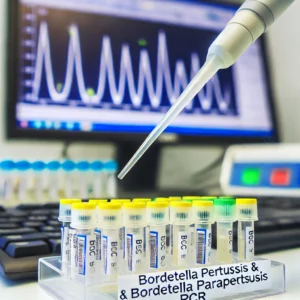
The use of positive quality controls in PCR assays offers several benefits:
- Increased Confidence in Results: Laboratories can confidently report results, knowing their assays are working as expected.
- Early Detection: Positive controls ensure that even low levels of bacterial DNA are detected, which is particularly important in the early stages of whooping cough when timely treatment can prevent complications.
- Compliance with Regulatory Standards: Using positive controls helps laboratories comply with regulatory requirements and ensures the consistency of results.
Future Directions
As molecular diagnostics continue to advance, there is ongoing research into developing more sophisticated positive quality control materials that can mimic clinical samples more closely. This would improve the ability of PCR assays to detect Bordetella species in various sample types, such as nasopharyngeal swabs. Additionally, advances in multiplex PCR technology are enabling simultaneous detection of multiple respiratory pathogens, including Bordetella pertussis, Bordetella parapertussis, and other bacteria, as noted by Johns Hopkins Medicine.
Conclusion
Bordetella pertussis & Bordetella parapertussis PCR Positive Quality Control is essential for ensuring the accuracy and reliability of molecular diagnostic assays. By incorporating well-characterized positive control materials, laboratories can ensure the sensitivity and specificity of their PCR tests, leading to better diagnostic outcomes and more effective disease management. As PCR technology continues to evolve, the importance of robust quality control measures will only increase, helping to maintain high standards in clinical diagnostics.